legal and regulation
Councils to charge private building control approvers under full cost recovery reforms
The Ministry of Housing, Communities and Local Government has published its response to the building control charges consultation, letting English councils set charges to recover the full cost of processing approvers' notices and certificates.
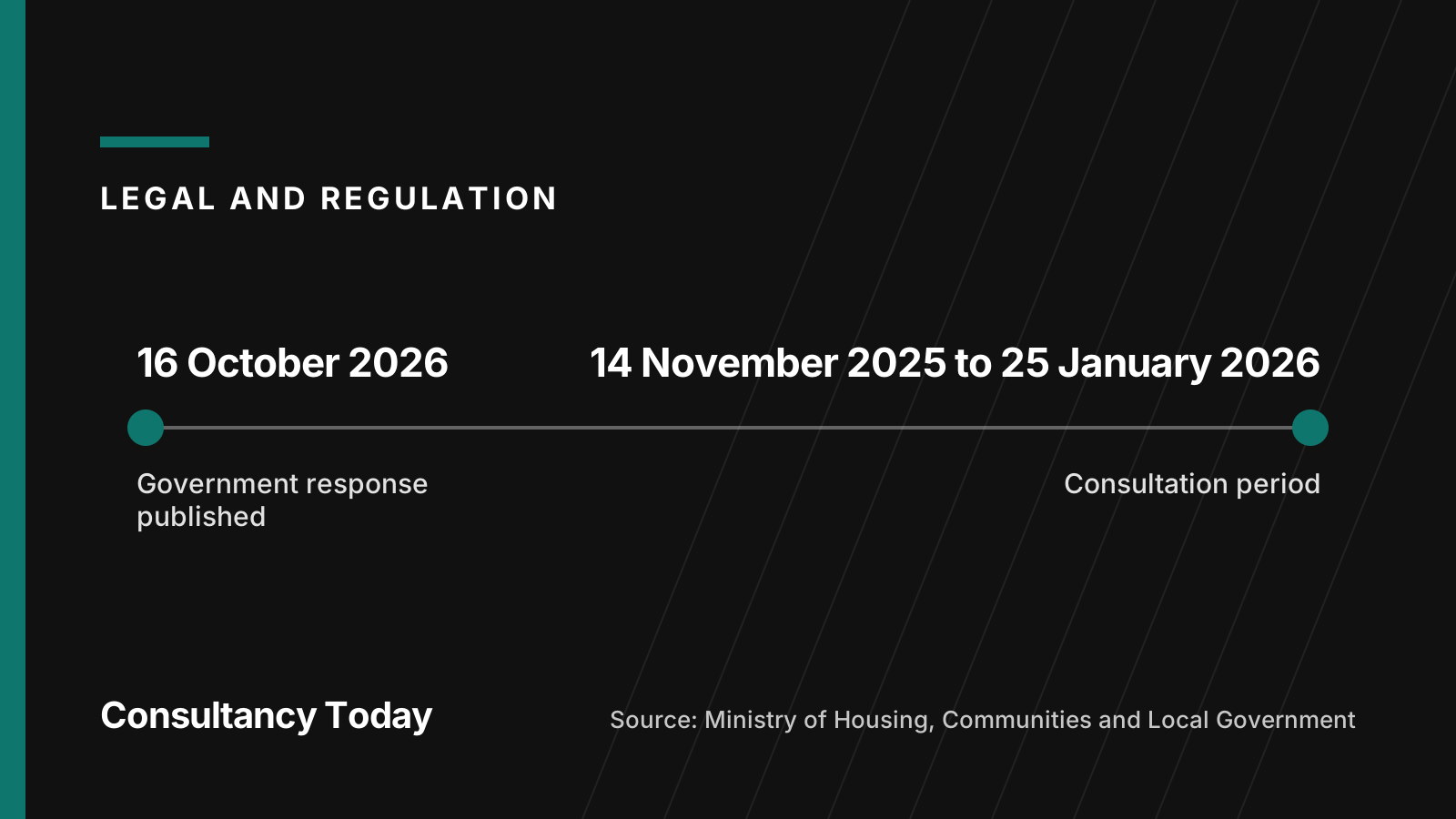
Councils in England will be able to charge registered building control approvers for processing notices and certificates under reforms the Ministry of Housing, Communities and Local Government confirmed on 16 October.
The ministry published its response to the building control charges consultation alongside an impact assessment, an environmental principles policy statement and a public sector equality duty statement. The consultation ran from 14 November 2025 to 25 January 2026.
Local authorities currently process notices and certificates from registered building control approvers (RBCAs) without charging. The government response said it will enable local authorities to set their own charges to recover the full cost of that work.
Non-payment of the charge will be prescribed as a ground on which a local authority building control body may reject an RBCA notice or certificate, according to the response.
The decisions
The government decided against extending the deemed acceptance periods for initial notices, amendment notices and plans certificates, which stay at five working days.
The background
The consultation document said the current Building (Local Authority Charges) Regulations came into effect on 1 April 2010. It proposed allowing local authorities to charge users for more activities on a fuller cost-recovery basis, with the stated aims of making services more financially sustainable, supporting more recruitment and development of registered building inspectors, and improving compliance with the building regulations.
The ministry acknowledged in the consultation that very little data on local authority building control costs and charges was readily available.
The government response refers to the report of the Building Control Independent Panel, chaired by Dame Judith Hackitt, which was published on 20 May 2026. The government established the panel in February 2025.
The panel found that the public sector system of building control had been progressively neglected. For the long term it recommended establishing fewer, larger building control bodies to take on statutory functions from local authority building control authorities, and removing dutyholders' choice of building control regulator.
In its 20 May 2026 response to the panel, the government committed to introduce revised charging regulations enabling full cost recovery across a wider range of building control activities and functions following the consultation. The October response sets out how the government intends to meet that commitment.
The same May response said the government had invested £55m over three years to build local authority building control capacity and enable more skilled registered building inspectors, with £5m of that going to a small number of pathfinder areas with high housing growth and limited building control capacity.
Lorna Stimpson, LABC Chief Executive, said of the panel report when it was published: "The long-anticipated report is a significant contribution to the conversation on the future of building control."
She added: "I am encouraged by the panel's acknowledgement of the skilled, knowledgeable and deeply committed people" working in building control.
What happens next
The government response said a forthcoming Digital Building Control Roadmap will set out its vision for a digitally enabled building control system.
Separately, the May response to the panel said work is progressing to establish a future Single Construction Regulator, which will take on the responsibilities of the Building Safety Regulator through a phased transition.
On the record: Ministry of Housing, Communities and Local Government
Sources
- Ministry of Housing, Communities and Local Government (GOV.UK) (opens in a new tab) (accessed 2026-10-17)
- Ministry of Housing, Communities and Local Government (GOV.UK) (opens in a new tab) (accessed 2026-10-17)
- Ministry of Housing, Communities and Local Government (GOV.UK) (opens in a new tab) (accessed 2026-10-17)
- Building Control Independent Panel (GOV.UK) (opens in a new tab) (accessed 2026-10-17)
- Ministry of Housing, Communities and Local Government (GOV.UK) (opens in a new tab) (accessed 2026-10-17)
- LABC (Local Authority Building Control) (opens in a new tab) (accessed 2026-10-17)
This story was researched from the primary sources above and checked against them before publication. Spotted an error? Tell us and we will correct it promptly.